AI-Native Engineering does not replace the SDLC. It surrounds every phase with context, automation, governance, and feedback so delivery becomes faster, safer, and continually improves.
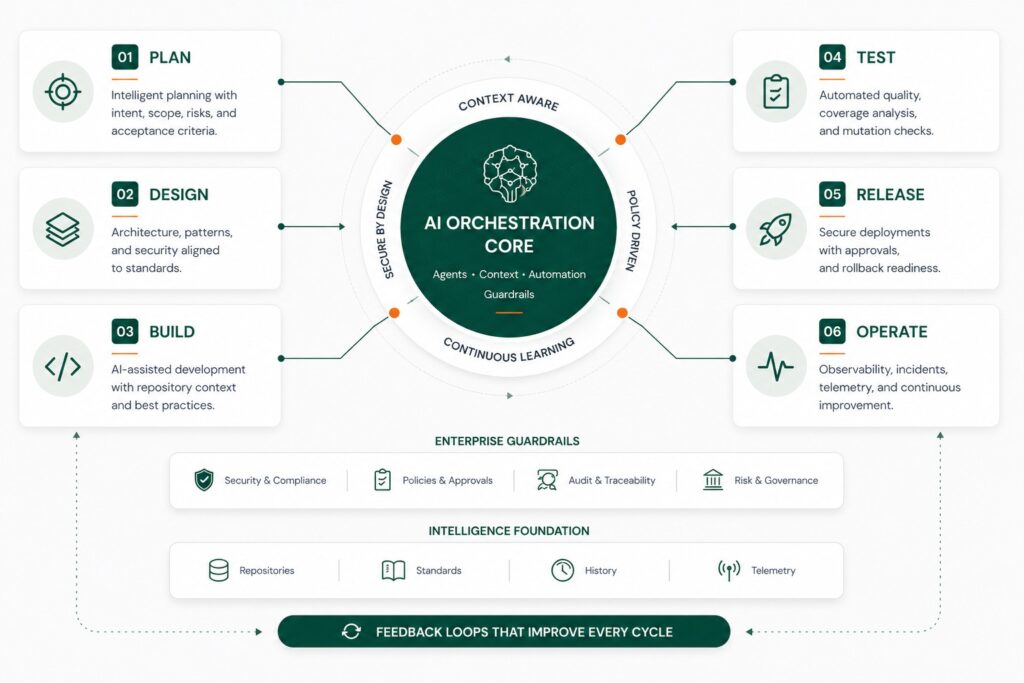
AI-Native Engineering does not replace the SDLC. It surrounds every phase with context, automation, governance, and feedback so delivery becomes faster, safer, and continually improves.

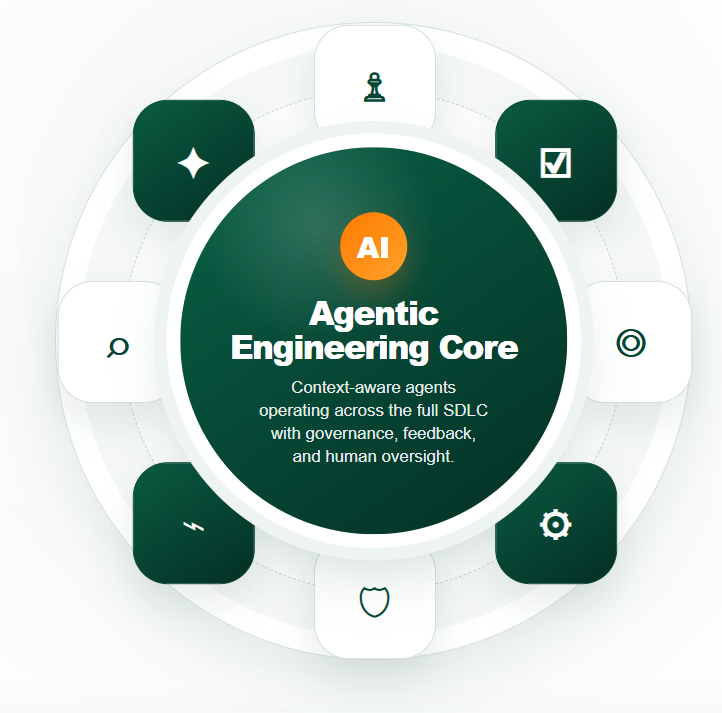
Coordinate planner, architect, coder, reviewer, tester, security agents, and release agents with defined responsibilities, handoffs, and escalation paths.







The foundation of quality, reliability, and scalable delivery.

Readable by humans, consumable by AI agents, and durable enough to support repeatable delivery.
Clear progression. Stronger systems. Better outcomes.
Fast exploration with low friction, lightweight documentation, and basic safety boundaries.
Shared usage with ownership, repeatable tests, review expectations, and basic support rules.
Formal controls, quality gates, data handling rules, monitoring, and release discipline.
High assurance, operational resilience, auditability, rollback readiness, and stronger governance.
AI-Native Software Delivery works best when acceleration is paired with review discipline, secure boundaries, clear ownership, inspectable agent behavior, and measurable governance.
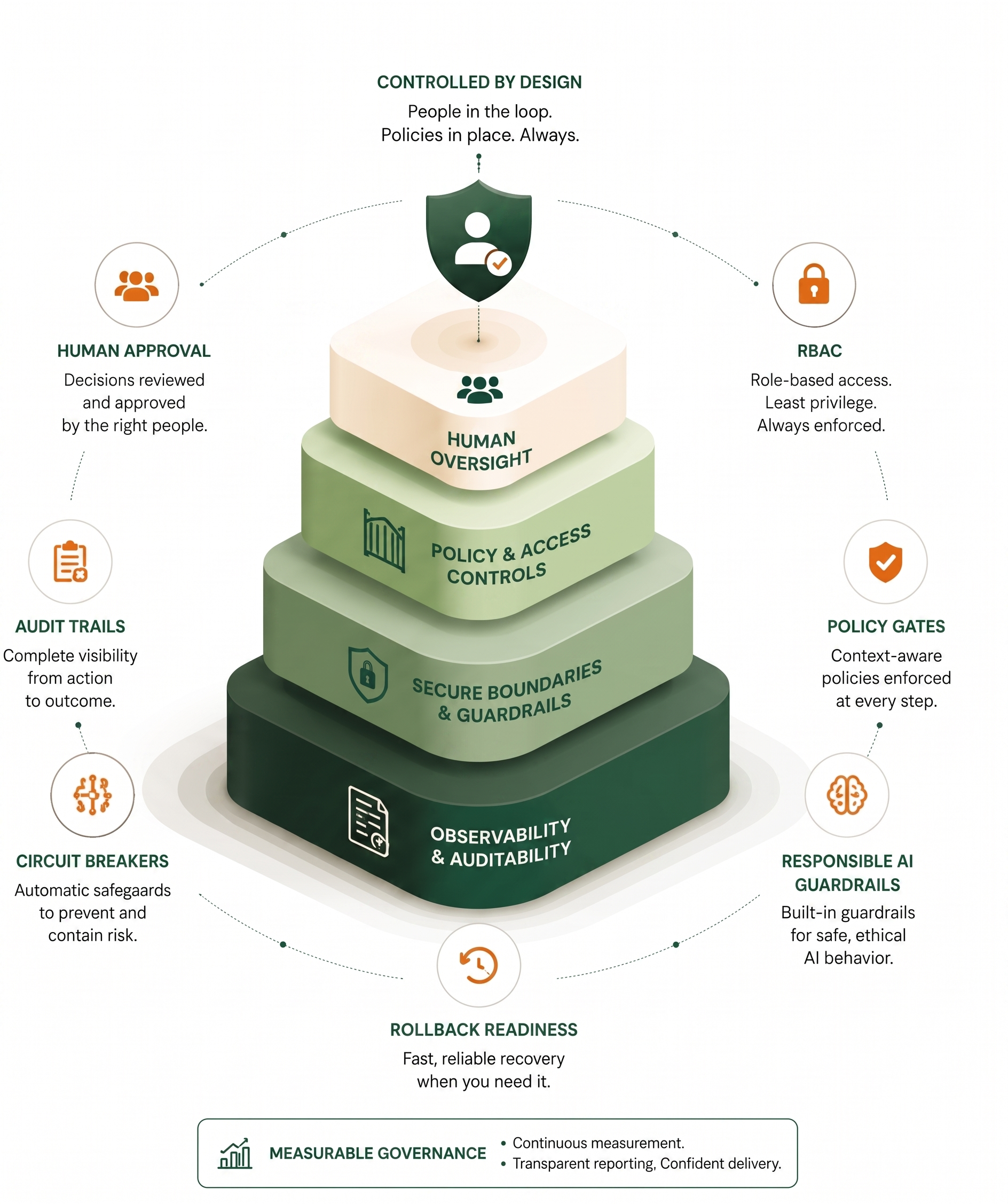
The goal is not more AI usage—it’s measurable improvement in how software is planned, built, tested, released, governed, and improved.
Outcome | Business movement | What leaders track |
|---|---|---|
Faster Delivery Cycles | Reduce repetitive documentation, coding, testing, and release preparation effort. |
Lead time
Cycle time
Release frequency |
Higher Engineering Productivity | Help teams focus on design choices, quality, security, and business logic. |
Throughput
Review time
Rework effort |
Stronger Test Coverage | Generate broader scenarios and identify weak tests using coverage and mutation signals. |
Coverage depth
Mutation score
Escaped defects |
Improved Traceability | Connect requirements, code, tests, releases, and incidents across one delivery thread. |
Requirement linkage
Release evidence
Audit completeness |
Reduced Operational Risk | Use telemetry and incident feedback to improve future releases before issues repeat. |
MTTR
Incident recurrence
Change failure rate |
Stronger Governance | Make AI-assisted delivery auditable, reviewable, and aligned with enterprise controls. |
Policy adherence
Approval evidence
Exception trends |